It was a great night in THP Students!
Tonight we did something a bit different: we structured the lesson so the students helped reveal the main idea together. I split the students into teams and gave each team a particular scripture. Each team had to read the scripture, figure out what it meant, and then present it to the group. For this post, I’ll share the verses and then explain them.

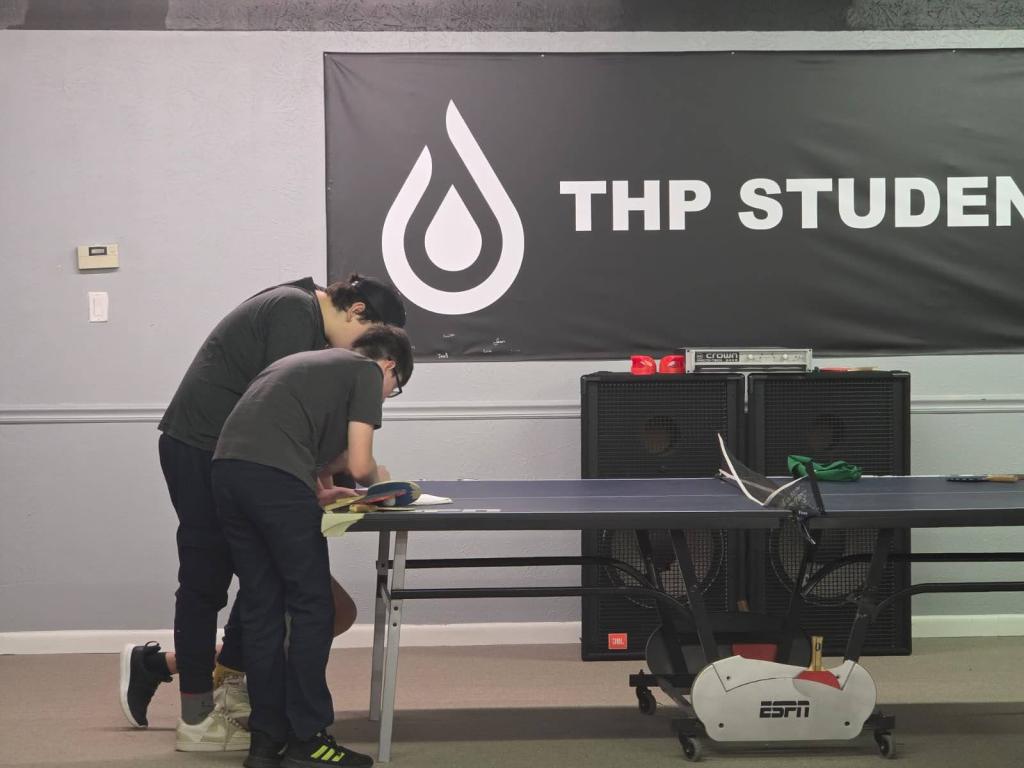



The first section of verses all come from Proverbs. Proverbs is what we call wisdom literature, where the writer is presenting small lines of wisdom that are very practical but also, if implemented, can change your life.
Proverbs 27:17 (ESV): Iron sharpens iron, and one man sharpens another.
Here, the writer relates the relationship between people to what happens when you sharpen iron. There’s friction, and it knocks off burs and hones us into what we are meant to be. Our students rightly applied this idea to the fact that we need other people. We were not created to be alone, and if we want to truly grow, then we need to be around fellow believers. Not just be around, but be in the kind of relationship that allows us to sharpen each other.

Proverbs 27:6 (NLT): Wounds from a sincere friend are better than many kisses from an enemy.
Here, the writer compares wounds from friends to the praise (or kisses) of an enemy. Our students pointed out that, in application, this means that while it may hurt when our friends correct us, it’s still better than someone whose intentions are not to see us grow in God, giving us praise and trying to build us up.

Proverbs 15:31-32 (NLT): If you listen to constructive criticism, you will be at home among the wise. If you reject discipline, you only harm yourself; but if you listen to correction, you grow in understanding.
Here, the writer shows that accepting correction is wise and that refusing it only hurts us. It doesn’t make sense to keep doing things the wrong way if we know that it’s wrong. The problem is that people get stuck in a place of pride where they don’t want to change, either because they don’t like being told they are wrong or because they have the mindset of “we’ve always done it that way.” Both are mindsets that only hurt us in the long run.
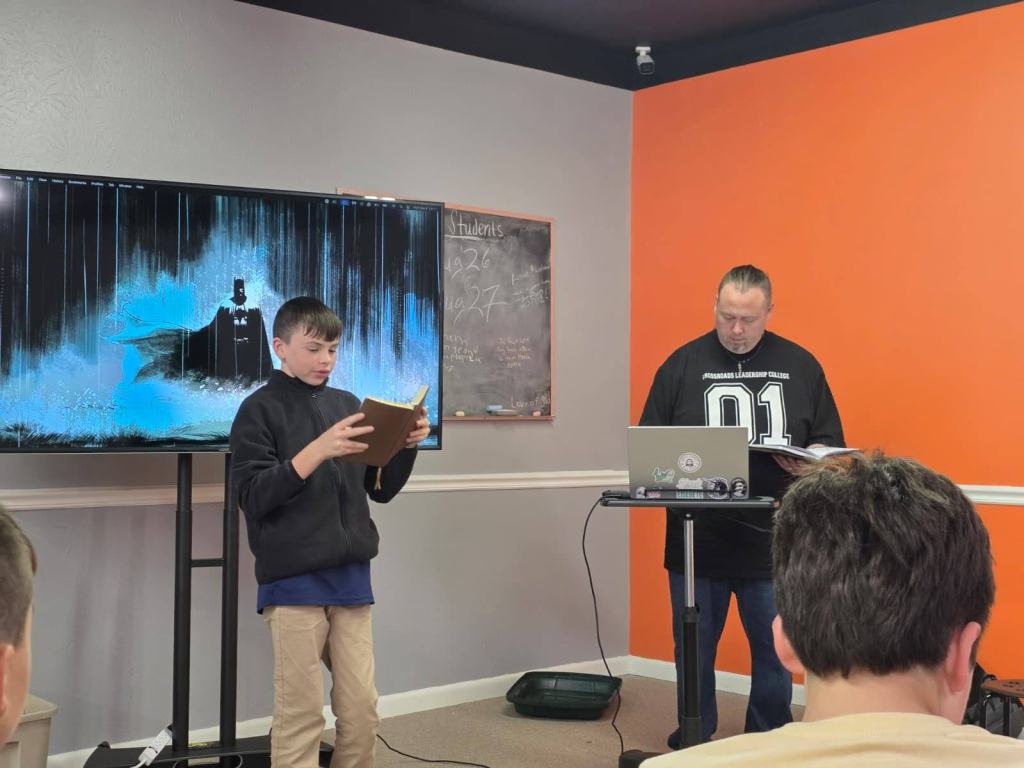
We now jump to the New Testament. Our first verse comes from Hebrews. While we aren’t sure exactly who wrote the book, much of the teaching feels very much like Paul. The Greek, however, is a bit different from his usual writing, and some speculate it’s because he had a scribe write down what he was teaching. Whoever wrote it was writing to a group of Jews who were now trying to reframe their mindsets and beliefs with Jesus now the center of their faith. This is a hard transition, especially when you move from a religious practice that often seemed based more on works to one based on faith. Many found themselves struggling in the community and even isolated.
Hebrews 3:12-13 (ESV): Take care, brothers, lest there be in any of you an evil, unbelieving heart, leading you to fall away from the living God. But exhort one another every day, as long as it is called “today,” that none of you may be hardened by the deceitfulness of sin.
Here, the writer encourages people to be involved in each other’s lives daily, so they can see what’s troubling each other’s hearts. It is impossible to know the hearts and minds of others if we are not present with them. But if we are present regularly, we can see the signs of fatigue, fear, doubt, and other things happening in each other’s lives and step in. Our students need each other, and they need the full body of Christ as well. They need folks in their lives who can “exhort” them so that their hearts don’t become hardened.

Ephesians 4:15 (NLT): Instead, we will speak the truth in love, growing in every way more and more like Christ, who is the head of his body, the church.
Here Paul is writing to the church of Ephesus, and he’s instructing the community how to act as one body. Within this, he lays out a very specific phrase, “speak the truth in love.” This is the Agape, godly love. This love sees others as the Father sees them and longs for them to become what the Father has called them to be. In a biblical community, where iron sharpens iron, that sharpening must happen in love. Correction isn’t done to demean and destroy, but to build up and restore. Remember that everyone takes correction differently, so in love we have to bring it to them in different ways. But we can only do that if we are in regular community, getting to know the hearts and minds of each other, as we talked about in the previous points.
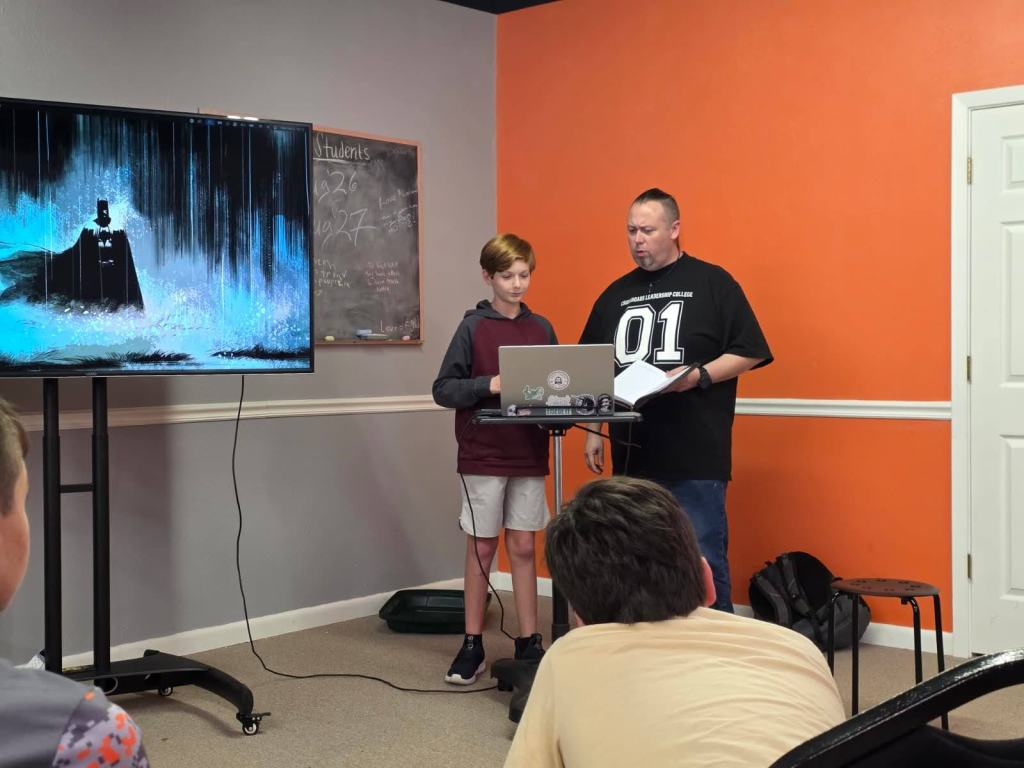
Hebrews 10:24-25 (ESV): And let us consider how to stir up one another to love and good works, not neglecting to meet together, as is the habit of some, but encouraging one another, and all the more as you see the Day drawing near.
Here, the writer of Hebrews encourages us to be intentional about how we stir each other into what God has called us to be. This requires humility and thinking of others more than ourselves. It also requires us to be intentional about being present and being around each other so we can encourage one another.
I then pointed our students to the Book of John. In chapter 4, Jesus encounters a woman at the well, and that encounter changed her life and the lives of her whole town. This started with a face-to-face encounter between the woman and Jesus. It wasn’t accidental; it was intentional and, culturally speaking, likely uncomfortable. But that encounter led to real face-to-face encounters with people in her town, and it transformed their lives too. This is why it’s so important for us to meet face to face and live with each other. Because what starts off with just one or two people being transformed quickly becomes 30, 60, and 100!
But in these face-to-face encounters, we have to be intentional about truly receiving what we’re given, not ignoring it. James 1:22-25 says this
But don’t just listen to God’s word. You must do what it says. Otherwise, you are only fooling yourselves. For if you listen to the word and don’t obey, it is like glancing at your face in a mirror. You see yourself, walk away, and forget what you look like. But if you look carefully into the perfect law that sets you free, and if you do what it says and don’t forget what you heard, then God will bless you for doing it.
Here, James, the half-brother of Jesus, addresses a community facing several issues at once, many of which involve acting out of step with the character and identity of a follower of Jesus. His book is very much the Proverbs of the New Testament, as it is a form of wisdom literature. Here, he’s specifically warning them against only listening to God’s words and not actually doing them. In our community, we sharpen each other as iron sharpens iron. When we receive correction and encouragement, we need to hold on to them and live them out.
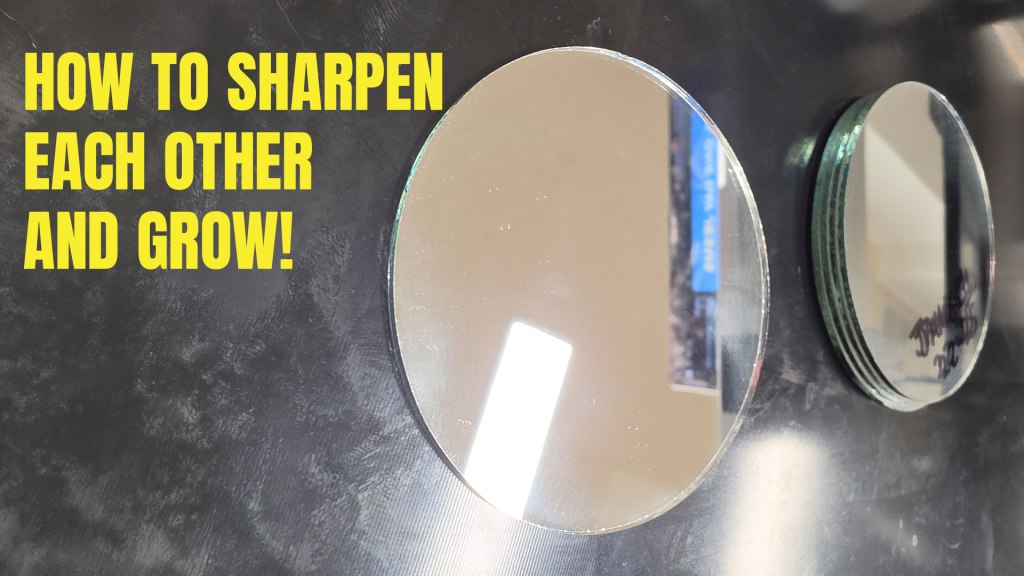
Here, I presented our students with tiny mirrors with James 1:22-25 written on them. This is to remind them what we should do, especially in light of what’s about to happen over the next few weeks in our student ministry. Over the next few weeks, we’ll be transitioning into small groups. In these groups, we’ll follow a video series called “A Well Story,” developed by Taylor Johnson. In these small groups, we will ask hard questions and sharpen each other as iron sharpens iron. We will bring correction where needed and lift up and celebrate what needs celebrating. All the way through, though, we have to remember to look in that mirror and not walk away forgetting what we look like, what God has actually called us to be.