
Crazy to think it’s been several weeks since we’ve had the chance to gather as a student group! It was so great to gather tonight, however! Tonight, we continued our conversation about why we believe what we believe!




Last time we met, we continued our “But Why?” series by diving into the big question: Is God real? We explored the idea that everything with a beginning needs a creator to set it in motion; just as a chair doesn’t appear out of nowhere, the universe needed a cause, too. We looked at how science and the Bible both point to a powerful Creator who exists outside of time and space. The most important takeaway was that because the universe was created on purpose, you aren’t a “cosmic accident.” You were made intentionally by a personal God who has a specific plan for your life!
This week, we are going to expand on this discussion by talking about how not only was the universe created on purpose, but it was done by an intelligent being who purposefully fine-tuned things, including you.
Some argue that while there may have been a cause for the creation of the universe, that creation occurred by chance. One idea of this is what many call “M-Theory,” that is, the theory of the “Multi-verse.” This is the idea that, by chance, something created an infinite number of realities in which an infinite number of choices are made, creating an infinite number of realities.
The problem with this theory is that it’s completely untestable; there’s no way to observe any evidence for this idea. Even if it were a true idea, it still doesn’t answer the question of who or what created the universe in the first place. Not to mention, we don’t live in a world defined by possibilities. That’s not how functional science works. It operates on probabilities.
So how can we discern that the cause of the universe was not only intelligent but intentional? As Christians, we can easily be pointed to the truth by the scriptures. In Psalm 19, David points to the perfection of the Law of God. In verse 1, he says this;
“The heavens declare the glory of God, and the sky above proclaims his handiwork.
So what can we learn when we look to the heavens? What are the Probabilities of the universe being what it is?
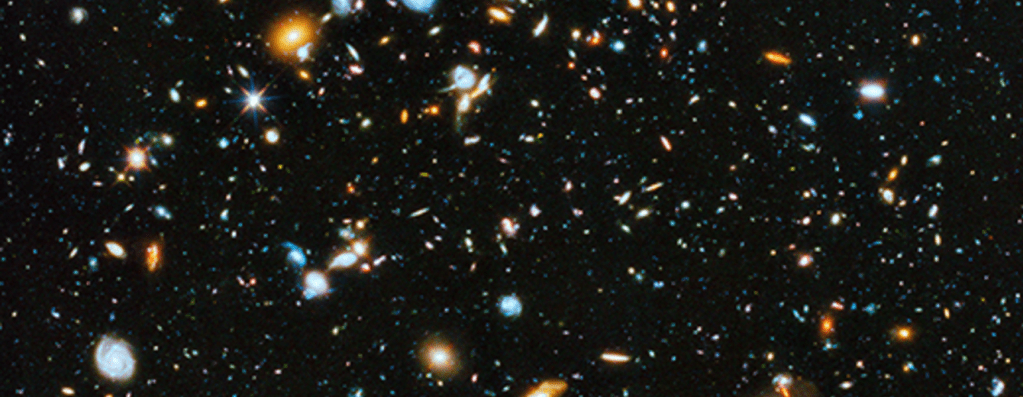
Matter
Everything in the universe is made of matter. Scientists have come to realize that, at the creation of the universe, there was the perfect amount of matter for its formation and expansion.
If there were more matter, the universe as a whole would have collapsed on itself before it could expand and form planets and stars. If there were a little less, the stars and planets would have never formed.
What is the probability of there being the exact amount of matter? 1 in a trillion, trillion, trillion, trillion trillion. That’s 10 with 60 zeros behind it.
Force
The strong nuclear force is the “glue” of the universe. It’s what holds particles and atoms together. If you increase the force by 2 percent, you create a ton more elements, but you’d also create a universe full of deadly radioactivity and very little hydrogen, which you’d need to create water. No water means no life. If you decrease it by just 5%, all we’d have is hydrogen, meaning the other elements for life wouldn’t exist.
Quarks
Quarks are tiny pieces that actually create atoms. Adjust what’s called light quarks by 2 or 3 percent in any direction, and carbon ceases to be a thing. Without carbon, we don’t exist.
But what about the formation of a planet like ours?
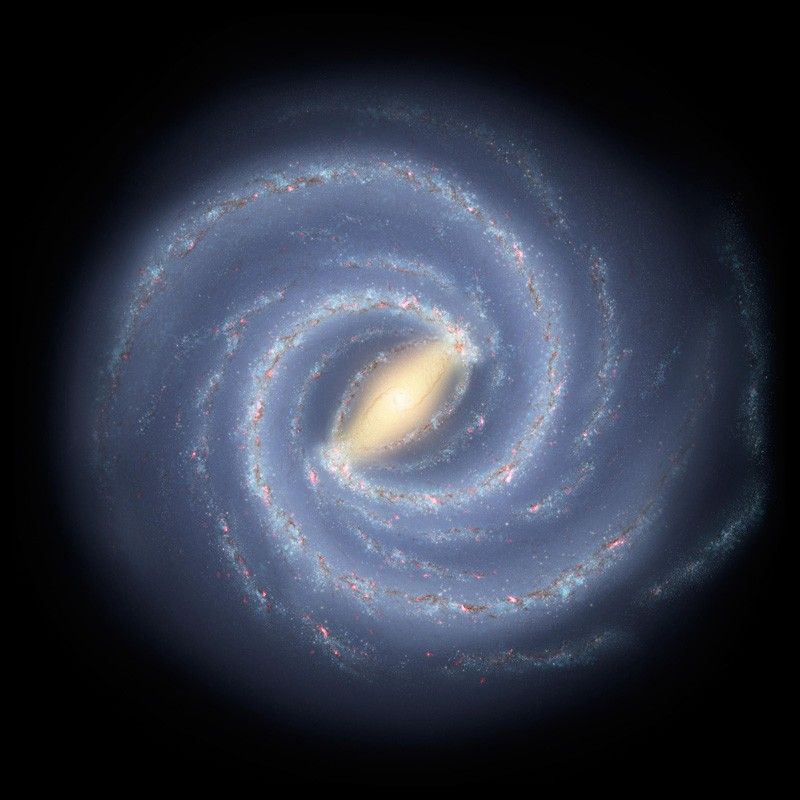
First, you’d need the right kind of Galaxy. There are 3 kinds of galaxies, and the kind we are in (spiral) is the only one that has the right kind of heavy elements and the right kind of radiation levels to sustain any form of life.
Then our position in the galaxy has to be right: too close to the center, you will have too much radiation, and a black hole! Too far, and you don’t have enough elements to create life.
The solar system
To have life, the solar system has to have the same kind of stable star as we do, and it can’t have multiple stars like other solar systems have. The Planet has to be the right distance from the sun, with the right rotation rate, amount of water, tilt, and gravity. It would have to have a moon just like ours. Big enough to stabilize our tilt.
You’d also have to have a planet like Jupiter nearby to act as a kind of guard against incoming meteors that could destroy our planet.
Statistically, the chances of finding a planet just like Earth primed to support life are 10-304. To imagine that, in your mind, write a zero on a chalkboard, then a point, then write down 303 zeroes, and then add a 1 at the end. Statistically, there is simply ZERO chance of another planet being perfectly formed to support life.
DNA
The construction of our DNA is another mark of not only an intelligent designer, but an intentional one. DNA contains several lines of coding that make every aspect of your body work and form. Your DNA acts as a kind of library that tells an organism what it needs to build the major components of life. DNA has long lines of code represented by ACG and T that are arranged in an exact pattern. One protein can have up to 2000 letters. Every bit of information to create life comes from DNA, but where does information come from?
We know from proper observation that information can only come from a consciousness. That intelligent consciousness intentionally created these patterns. Random happenstance could not create the complexities of life found in DNA.
So what’s a logical reason for all of this? God! If this is the case, what does this tell us about him?
When we look at the impossible math behind things like light quarks, the strong nuclear force, and our DNA, we can see that the Creator isn’t just a “force,” but a specific kind of Being. Because He created space and time from nothing, He must be transcendent and timeless, living “outside the box” of the universe, just like a programmer isn’t a character inside their own computer game. Since He created every atom, He is immaterial (a spirit), and the immense energy required to balance the stars and matter demonstrates He is incredibly powerful and intelligent. Finally, because He wrote the complex “code” of your DNA and carefully placed Earth in the perfect spot for you to thrive, we can logically see that He is a personal, creative, and caring God who didn’t just create a planet by accident—He intentionally designed a home for you.
But how can we be sure it’s the God of the Bible?
Dr Michael G Strouss said this, “If there’s just one creator, that rules out polytheism. (Multiple Gods). Since he’s outside of creation, this rules out pantheism (God is nature). The universe is not cyclical (the idea that time begins and ends in an eternal cycle), which violates the tenets of Eastern Religion. [Sudden beginning of the universe] contradicts ancient religious assumptions that the universe is static.
Scripture tells us much of this. Genesis 1:1 tells us that there was a beginning to the universe. Job 9:5 tells us that God stretches out the heavens, much like the universe is expanding. Isaiah 40:11 tells us how God meticulously measured out the very construction of the earth. Psalm 139:15-19 tells us how God had a meticulous plan in the formation of each of us.
As we said last time, there’s a cause of creation. That cause is God. But the exact details that went into the creation of each one of us are so meticulous that it means none of us is a mistake. Are there any defects or mutations? Yes. But what caused those? Not God but the corruption caused by people, often while acting outside of the will of God. God longs to restore us to what we are meant to be, not just physically but spiritually, because He cares about each one of us.
 Adventures in Student Ministry