


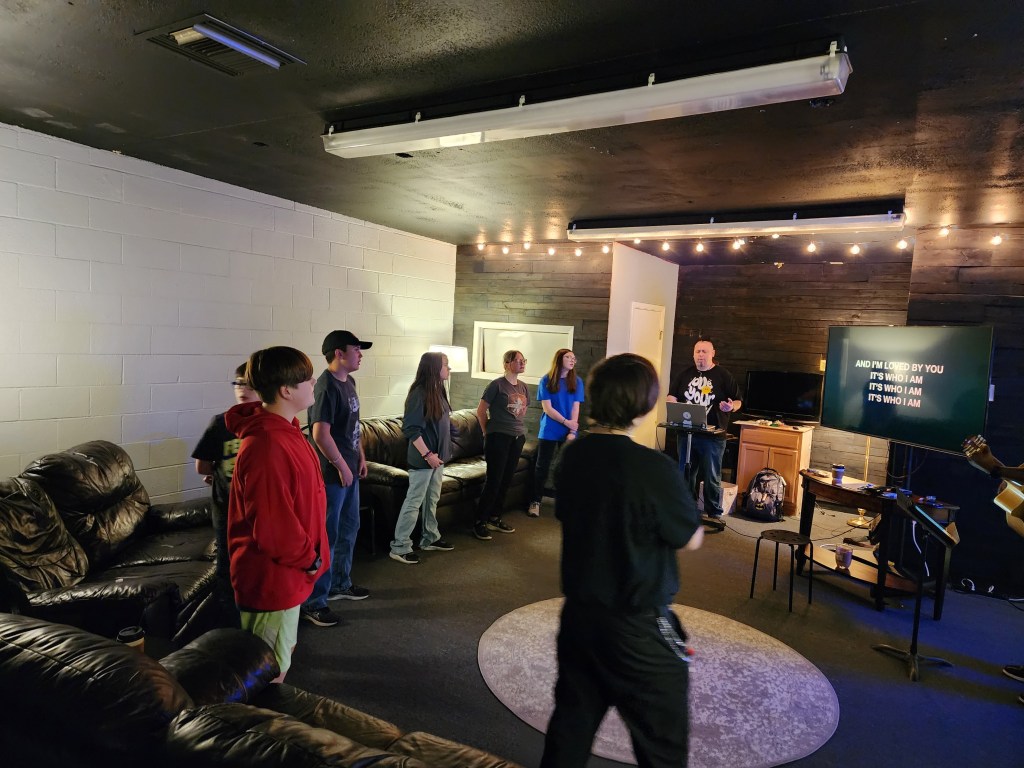





Over the last couple of week’s we’ve been talking about preparing our “Spiritual Go Bag.” Last time we talked about the importance of having a flashlight or a lamp that guides our path. We talked about how that represents the scriptures. The word of God guides us and helps us to avoid the things ahead of us. But today we are to talk about the importance of taking time to truly understand the plan.
When you talk to people who are skilled at preparation, one thing they often say is that you should constantly review the plan and mentally run through it on a regular basis. Another way to say this is to “meditate” on the plan.
ASK: When you hear the word mediate, what comes to mind?
Many think of people sitting on the ground, crossing their legs, saying mantras, and emptying their minds. These things occur in New Age or Buddhist meditation, but this is NOT what biblical meditation looks like. So the question becomes, what does Biblical mediation look like
READ: Psalm 77:12 (ESV) – I will ponder all your work and meditate on your mighty deeds.
Here, we see a call to meditate on the things of God, which, of course, are found in the scriptures. The book of Joshua further challenges us to meditate on the scriptures: Joshua 1:8 (NIV) reads, “Do not let this Book of the Law depart from your mouth; meditate on it day and night, so that you may be careful to do everything written in it. Then, you will be prosperous and successful.”
Being successful followers of God meant being dependent on thinking about or meditating on the scriptures.
There are 3 Hebrew words used for meditating in the scriptures.
- Hagah: To Ponder or to Imagine
- Damah: To Consider or compare
- Siyach: To Ponder or Think closely on
The central core of mediation is simply this
- Take time think about scripture
- Take time to consider the scripture
- Take time to ponder scripture
Read Hebrews 4:12 – For the word of God is living and active, sharper than any two-edged sword, piercing to the division of soul and of spirit, of joints and of marrow, and discerning the thoughts and intentions of the heart.
Take note of the active words in this verse: “Living,” “Active,” “Piercing,” and “discerning.” These words tell us that meditating on the scriptures means that something actively takes place in the lives of Christians when we interact with the scriptures. Be it challenging us, revealing things we need or don’t need, or giving us peace that we may desperately need.
Throughout history, there have been different approaches to Biblical Mediation. Some have suggested sitting quietly, relaxing your mind, holding your hands up to receive from the Holy Spirit (much like we do when we are involved in worship), repeating things like “Peace” or “Jesus.” Early church father Ignatius of Loyola emphasized using your five senses when focusing on the text that you’re meditating on specifically. He challenged people to picture themselves in the scriptures and reflect on the sights, smells, sounds, tastes, and feel of environments and moments.
ASK: What would this look like if we did it with the Last Supper?
Some, however, warn against the danger of visualizing. The fear is that in your time of visualizing, you may imagine things that didn’t occur in the scriptures and then apply meaning or theories over the actual written word of God. An example that’s come into controversy is the series “The Chosen.” They’ve taken some creative liberties with various moments in the scriptures and added things to help flesh out the story and help people experience it better. They added things like making Matthew autistic or having Jesus express a moment of remorse and telling Judas he would pray for him when he was about to betray Jesus. These are not things said in the Bible. Could they have happened? Maybe, but we can’t build a doctrine off these things. When we meditate and visualize ourselves in the Bible, we do need to make sure that we don’t place our imagination over the facts of the scriptures.
ASK: What’s the benefit of Mediating on scriptures?
Back to our discussion of a Spiritual Go back, when we take time to review things, focus on them, and picture the procedures, then when we need them, there’s peace. We aren’t scrambling or struggling to get things done. We can do thing smoothly. “Smooth is Fast” is a phrase that highlghts this idea.
In our walk with God, there will be times when life gets chaotic, when we are on the go, and when we are unsure about things. Regularly meditating on the scriptures means that we can recall truths and aspects of the word of God quickly so that we don’t panic. At the same time, if we are in a place of panic, it will calm us down so that we can focus on what God has for us. Mediating on the scriptures is a great way to destress our minds and helps us to hear God more clearly, receiving wisdom, guidance, and comfort.
PRACTICE:
1. Get away from noise and distraction.
ASK: Where are some places that you could go?
2. Select a Scripture.
3. Break it into phrases.
4. Read through it several times, emphasizing different phrases or words.
5. Pause after each reading to allow the Spirit to speak.
6. Take time to ponder and think on these words.
7. Write down your reflections and thoughts. Listen to what the Spirit is saying through the Scripture.
 Adventures in Student Ministry