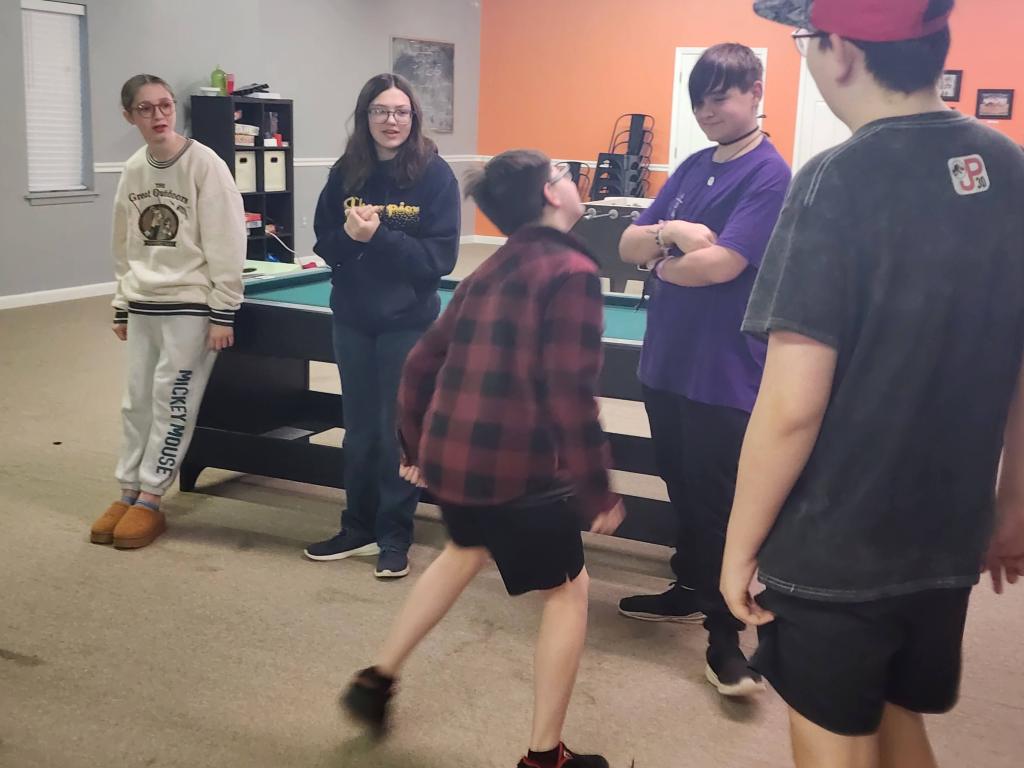
Tonight, we kicked off the the night by playing a game called Signs. Each student creates a hand signal that is unique to themselves. The person who is “IT” has to figure out who has “the sign.” To pass the sign, the student has to do their sign and then another person’s sign. LOL, the students were a bit confused with the game, but they had fun as they tried to communicate with their hands.

The Lesson
Over the last two weeks, we’ve been talking about Worship. In our first week, we talked about WHY we worship God. We talked about how He’s worthy of praise. Last week, we talked about why we sing when we worship God. We talked about how songs are expressions of emotions and how some of our songs are songs of victory; some express thanks and some even express grief. This week, we are going to talk about another action that takes place during worship: the use of our hands.
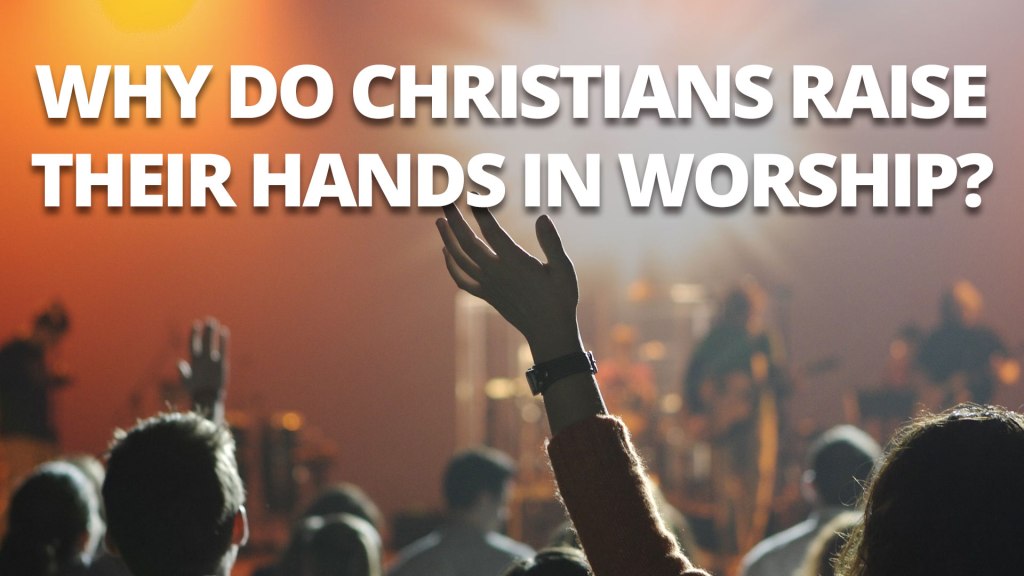
ASK: Why do people raise their hands in worship?
It’s Biblical
The idea of using our hands in an act of praise is found throughout the scriptures. Back to Genesis 29, when Leah, the wife of Jacob had birthed her 4th child she said the following in verse 35:
And she conceived again and bore a son, and said, “This time I will praise the Lord.” Therefore she called his name Judah. Then she ceased bearing.
The Hebrew word translated as “Praise” is “yada.” Yada means to throw, shoot, cast, but the use here suggests throwing your hands up or holding your hands out for the purpose of worship. We see this word and the concept of the word used multiple times throughout the Old Testament. In Psalm 63:4 we see the following words:
So I will bless you as long as I live; in your name I will lift up my hands.
Here, the psalmist uses the words “barak nasa kap” (baw-rak nah-saw kaf), meaning that he would literally kneel and raise his hands in worship while blessing God or worshiping him.

Worship calls for our entire bodies to be involved.
Often, we talk about how the act of caring for people and how every action we do is an act of worship unto the Lord. In Romans 12, Paul is on the back end of talking about the great mercies of God and how Gentiles are now grafted into the Promise of salvation. In chapter 12, he says the following thing:
I appeal to you, therefore, brothers, by the mercies of God, to present your bodies as a living sacrifice, holy and acceptable to God, which is your spiritual worship.
Now, contextually, he is calling for the act of changing our mindsets on things, but it still carries the connotation that our bodies themselves should be involved in worship. So what do we do with our hands?
Just like how songs express different emotions, our hands also express various things.
ASK: What does that mean if I lift my fist in the air?
ASK: What does that mean if I casually hold my fist out to you?
ASK: What does that mean if I pull my fist back dramatically while facing someone or something?
One represents power or victory, one represents a casual greeting or celebration, and another represents anger and violence. Similarly, our hand positions say different things in our worship of the Lord.
Our hands can represent an act of surrender, meaning we are surrendering ourselves to the will of the Lord. It could mean we are being vulnerable with the Lord; we are, in a way, saying, “Lord, here I am.” Depending on your posture, you could be saying that you’re willing to receive from the Lord. Our hands could be held high to celebrate His goodness and kindness. Our hands could point to the Lord as though we are singing straight to Him.
To wrap up tonight we spent some time in worship and we challenged our students to worship and use their hands.





Parent Questions
- Why do you think raising our hands is a way to show worship to God? How does it help us express what we feel?
- What are some different ways we can use our hands to show emotions during worship, like surrender, joy, or asking God for help?
- How do you think worship involves not just our voices but our whole bodies? Why do you think that’s important to God?
When you sing songs during worship, how do you feel when you use your hands compared to when you don’t? Does it change the way you connect with God?
 Adventures in Student Ministry