
To kick off tonight, we began playing a game of charades. It’s a fun and silly game that requires players to say something without saying it. It was so much fun, and let’s just say the students got creative with how they explained these words.
//www.instagram.com/embed.js
The Lesson
It’s amazing the things that can be said without any words being spoken. Sadly, however, sometimes we can say things we don’t intend to because we don’t speak up. Last week, we talked about the power of our words. We talked about how easy it is to offend people by our words and how to handle things if we have been offended and if we offend others. This week, we will discuss a similar issue: What do we do if we are offended because someone failed to say something, and what do we do if we discover that someone has misinterpreted our silence?
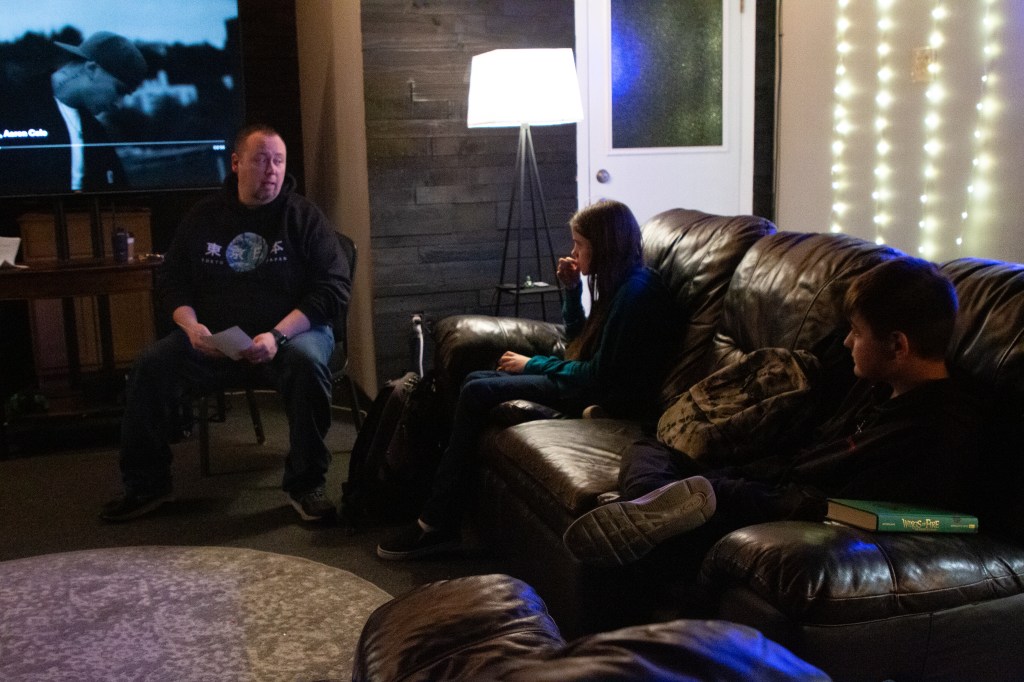
Ask: Have you ever been in a situation where you’ve worked really hard to accomplish something for someone else, and when you have finished, you receive no recognition of your hard work? How did that make you feel?
Oftentimes, when people experience this, a level of offense takes place. They suffer from feelings of being disrespected and not appreciated.
Ask: If someone is walking around with these emotions and they don’t deal with them, how may they begin to act in the context of a community like a church?
These kinds of unresolved feelings can cause major damage to a community. A person may begin not to take part in group projects or conversations or help with major outreaches because they feel like their efforts would not be appreciated. Bitterness can begin to seep in, and they begin to see people who were once friends as enemies. Beyond that, they may begin to be short with people. They may begin to say sarcastic or flat-out rude things about the people who have offended them, causing even more of a riff in the community as a whole.
In the context of a youth group or church setting, this can not only cause problems in the local body but affect how that person sees Jesus himself. They may begin to think that Jesus doesn’t care what they do.
Now that we know the effect of this kind of offense let’s talk about what to do if we have been offended in this way and how to help people if we have offended them.
- We have to humble ourselves in both situations. We need to be humble enough to go to the person and let them know how we are feeling, even at the risk of us being wrong, and if we’ve hurt someone’s feelings because we’ve neglected to show them proper respect, we need to be humble enough to apologize. This can be hard for both people, especially since we often think we are the ones in the right. But look what James says:
James 4:10 ESV Humble yourselves before the Lord, and he will exalt you.
It’s hard to do so, but if we put our trust in God and are willing to humble ourselves, He’ll take care of us. - Next, we must be honest with ourselves. We need to be willing to take a hard look at ourselves and the situation. If we are dealing with being offended, we need to look at the situation and ask: Are they purposefully ignoring me and disrespecting me? Or have I misread the situation? At the same time, if we have offended someone, we need to really evaluate. Have we accidentally or even intentionally been dismissive of the other person’s feelings?
- We need to be rooted and grounded in love. In John 13:35, Jesus teaches the following: “Our love for one another will prove to the world that you are my disciples.” (NLT) If we’ve been hurt by others or if we’ve hurt others, we need to be active in trying to restore that relationship. We need to be willing to go to each other and have hard conversations, all for the sake of restoring the friendship and the brotherhood/sisterhood that is established. But most importantly, making sure while we are in good standing with each other, we remain in good standing with God.
- We need to be continually filled! We need to be continually enveloped in prayer and the scriptures. If we keep our minds and hearts focused on God then it’s far easier for us to forgive each other, but also be active encouraging each other so that these things don’t take place.
So, how do we avoid this situation altogether? Or at least to the best of our abilities? In Romans 12, Paul lays out some very practical teachings on what we as Believers should do on a day-to-day basis, starting in verse 14 he says the following:
14 Bless those who persecute you; bless and do not curse. 15 Rejoice with those who rejoice, and weep with those who weep. 16 Be of the same mind toward one another; do not be [r]haughty in mind, but associate with the lowly. Do not be wise in your own estimation. 17 Never repay evil for evil to anyone. Respect what is right in the sight of all people. 18 If possible, so far as it depends on you, be at peace with all people.
In this verse Paul says a lot, but there’s two main things I want to point out
- In verse 15, he specifically talks about rejoicing and weeping with others. This requires being intentional about appropriately responding to others in the various seasons that they are in. This is why it’s so important for us to develop more than superficial relationships and develop relationships where we can not only be honest with each other but also learn how to truly encourage each other.
- Do the best that YOU CAN, to be at peace with others. This doesn’t mean you become a doormat for others to walk over you either because they demand more of your time or, in the opposite case, they ignore you altogether, and you just be fine with it. But it does mean being active and doing what’s best. Go out of your way to celebrate people and talk with people when you can. But at the same time, grace to know that some people are simply thinking about other things, and it’s nothing personal if they miss something you’re going through.
 Adventures in Student Ministry