
We kicked off tonight with a fun game called “Captain On Deck.” This is a fun game that gets students moving. First we paired our students up and explained the rules. There are 3 commands that have very specific actions in this game.
- Captain On Deck – Each student stands in a military salute position.
- Man the Boats – Students drop to the ground and sit close with feet touching, then grab each other’s hands; they then “row” back and forth.”
- Man over Board – One student picks up the other student


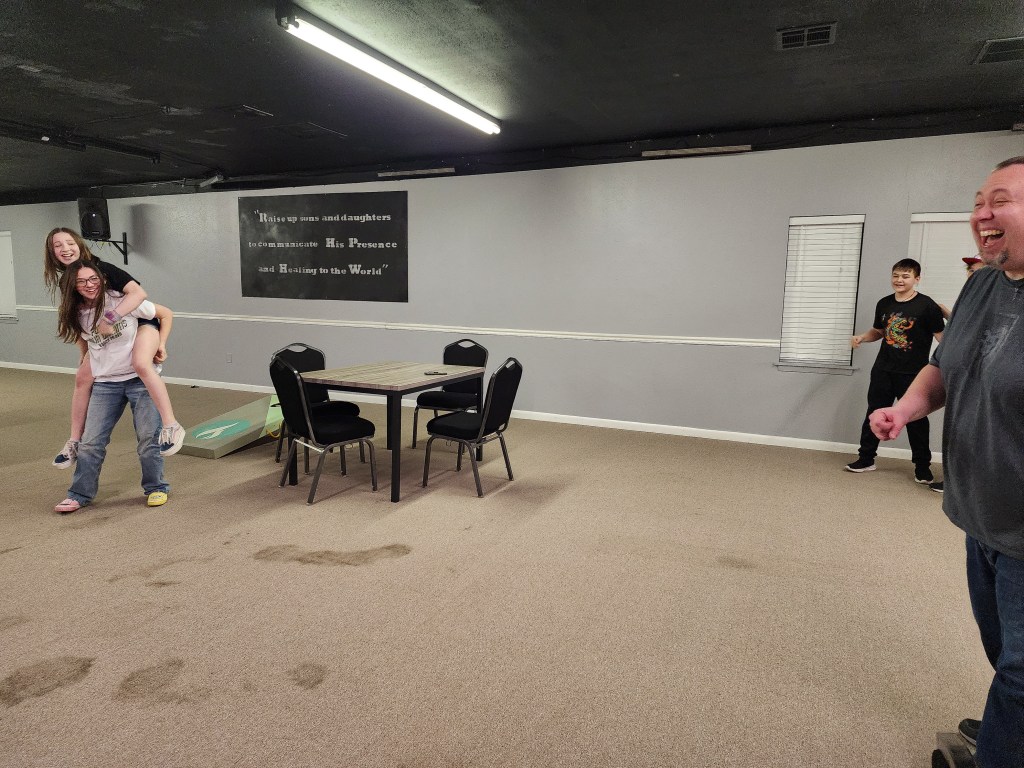

This game moves very quickly and becomes very silly as commands come faster and faster and quickly tire out. Needless to say the students did a lot of laughing and were a bit short of breath at the end of the game.
The Lesson
“Sticks and Stones may break our bones, but words will never hurt me.” This is an age-old mantra that we teach kids. It’s one we teach kids to help to process the fact that while yes, words can hurt our feelings or offend us, they can’t physically hurt us. The idea behind this was to disarm an attacker by seemingly not caring about the only thing they can do: talk bad to us. But as I said, words can hurt our feelings. While yes, you’re not physically hurt, emotional trauma is a real thing. Often, it’s simply things spoken that cause the biggest offense to people. The question becomes, what does the Bible say about our words?


James 3:3-5a 3 We can make a large horse go wherever we want by means of a small bit in its mouth. 4 And a small rudder makes a huge ship turn wherever the pilot chooses to go, even though the winds are strong. 5 In the same way, the tongue is a small thing that makes grand speeches.
Ask: According to the verse, how is the tongue like a “bit” or “rudder?”
Horses are large, powerful animals. They have been used to power plows, transport goods and people, and vehicles of war. Yet the steering of them is a small wood piece they bite on. With simple tugs at the reins, you can lead them just about anywhere. A ship is a huge vehicle that is powered by two powerful forces: the tide of the water and the wind in the sails. But man cannot control the direction of these forces. The only way to direct a ship properly is a tiny piece of wood that sticks out the backside called a rudder. This tiny piece shifts back and forth according to the captain’s direction, allowing them to navigate even the worst of conditions.
The words people have spoken have moved nations. They have inspired people to do great things and, sadly, some tragic things. One of the greatest speeches I’ve heard that could move mountains was the one spoken in the movie Independence Day. In this film, mankind is being exterminated by aliens, and mankind has come together for one final offensive. Before the battle, the president gets up and gives this speech:
But as I said, while the tongue can inspire, it can also be very destructive and offensive. In our game “Captain on Deck,” our students did some very silly things based on the words given by the leader. For some, it was fun; for some, it was exhausting. When a person uses their words, they have a choice: use them to encourage or use them to tear down. But how destructive can our words get?
James 3:5b- But a tiny spark can set a great forest on fire. 6 And among all the parts of the body, the tongue is a flame of fire. It is a whole world of wickedness, corrupting your entire body. It can set your whole life on fire, for it is set on fire by hell itself
So here James says that while the tongue can be a great tool to lead people, it can also be destructive. Check out what Proverbs 13:3 says about our tongue.
Those who control their tongue will have a long life; opening your mouth can ruin everything.
The main point here is that we must be very careful about what we say and how we say it. In our communities, be it church, school, or households, we must be cognitive of what we say to each other. This doesn’t mean we walk around on pins and needles, worried all the time. That way, we may say something that may or may not upset people, but we need wisdom in talking to people. We must be intentional about not putting people down or “smack-talking” all the time. We need to be intentional about building each other up and making sure that those in our sphere of influence know that we love and care about them.
Ask: How should we respond if we have offended someone with our words? Also how should respond if we have been offended by someone else’s words?
Last week we talked about 4 main things we need to do when we are dealing with offense.
- Humility – If we have been offended, we must be humble enough to ask hard questions about the situation. Is it possible that we have misinterpreted the situation and the words spoken? If we are the ones who have offended people, we must be willing to admit that their feelings are legitimately hurt. If you intentionally attacked them, you need to apologize; if you didn’t, you need to make sure to share that with them.
- Honesty with Yourself – This plays into the conversation about humility. If we are offended, we need to be humble enough to ask ourselves, did that person really intentionally attack us? Or are we just allowing our emotions to run away with ourselves? This, sadly, is something I see often. We are moved by our emotions, which, while they may genuinely be hurt, aren’t always the truth. Our emotions often exaggerate the situation. At the same time, if we are the offender, we need to be honest with ourselves. Why did we feel the need to say what we said? Are we honestly wrong here?
- Rooted and grounded in love – The Bible teaches that people will know that we are God’s by our love for each other. It also teaches that when we are offended, we should do the following: “If another believer sins against you, go privately and point out the offense. If the other person listens and confesses it, you have won that person back.” (Matthew 18:15) If we are offended, our response to those offended us should be to restore the relationship as best as we can. An action that takes humility and honesty. Confronting someone isn’t about shaming them; it’s about the opportunity to be restored. At the same time, if we have offended someone, we need to go to them and ask for forgiveness.
- Continually be filled – We can’t do any of this if our relationship with God is off. We must be continually in the scriptures and in prayer, especially when our emotions are involved. Truth is if we are continually in the word and in prayer then often the things we say are filtered through that relationship, leading us, hopefully, to be less likely to offend others with our words intentionally.
 Adventures in Student Ministry