To start, we played a game of observation. We paired the students up and then gave them the following instructions. “Look at your partner for 30 seconds.” This was gloriously awkward for all the students! At the end of the 30 seconds, we made them stand back-to-back and answer the following questions.
- What color are your partner’s eyes?
- Is your partner wearing a watch?
- What kind of shoes is your partner wearing?
- Is your partner’s shirt tucked in or untucked?
- What color is your partner’s shirt?
Some of our students were pretty sharp and picked up on what we were doing, so they were able to answer the questions. Others, however, well they struggled.


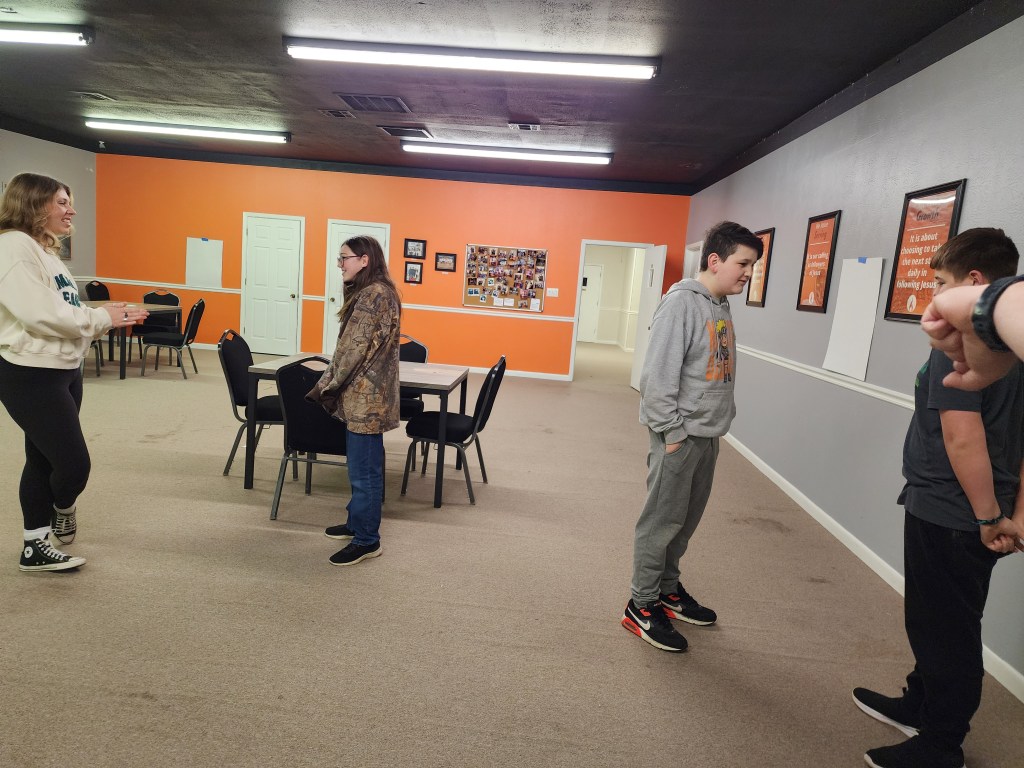
When looking at someone, you may remember some basic details about their appearance. But it takes intentional observation to really know about them. If you took a lot of time to observe someone, you could notice things like how they fidget when things get awkward and how they eat only one item on a plate at a time rather than jumping from item to item. When we say that we are to read our Bibles, we need to be intentional about reading them and aware of what’s happening in the passages we read. A casual glance can get you by, but genuinely observing what takes place makes it so that we can truly understand things.
There’s an excellent methodology for studying our Bible that helps. It’s called SOAP. It’s a process of journaling as we study our Bibles. It’s a pretty simple process.
S – Scripture – Pick a scripture that you want to get into. Often, it’s suggested that you maybe write that verse/passage out in your journal. Doing this allows us to remember things better and forces us to focus on what the words are saying.
O– Observation – This is where the work comes into place. We need to observe who’s talking in the passage. Who are they talking to? What was said before the passage we are reading? What’s said afterward? This all comes down to one central final question – What did this passage mean to the original readers? (What is the central idea of the text?)
A – Application – This is where you take the data you’ve observed, the answer to the big question of “What did this passage mean to the original readers?” And ask the question, “How does this passage apply to my life? This can go several ways. It could be a direct correlation, like when the Bible says, “You shall not commit murder,” then obviously it means you should not murder people. At the same time, you could be looking at David’s fight with Goliath, and the application would be that God often prepares us for challenging situations before we get there.
P – Prayer – This is where we spend time with God concerning the verse. Ask God to help us to live it out. Maybe pray the verse itself. This step takes us from the academic practice of our Bible Study to the Spiritual Practice of our Bible Study.



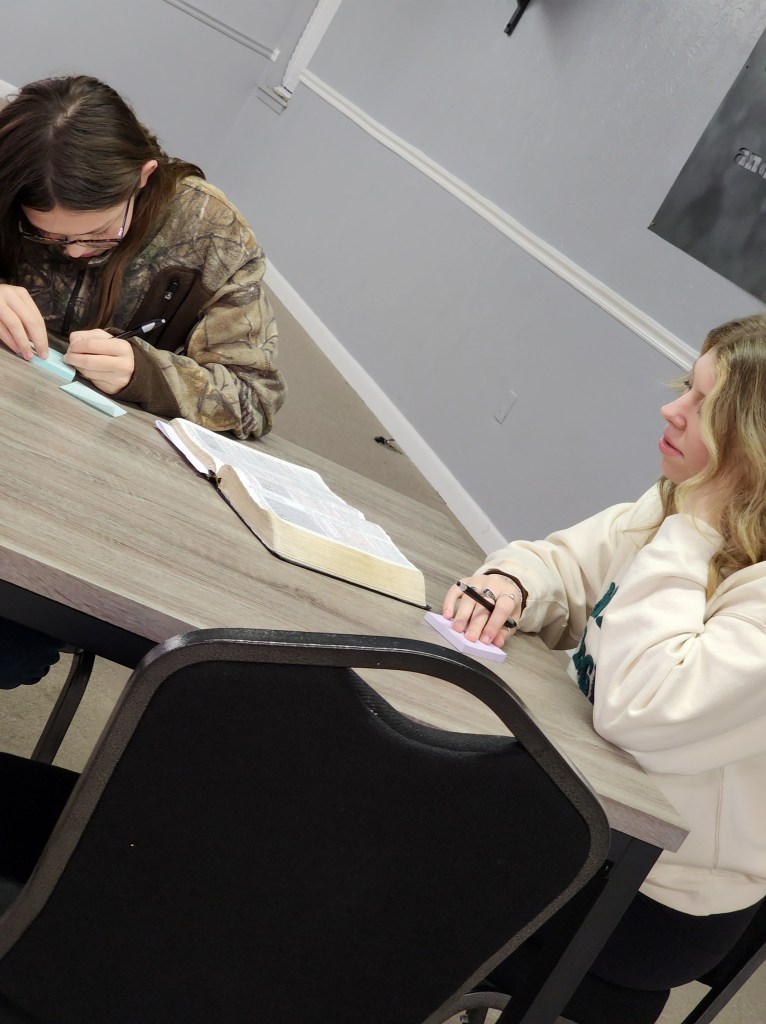
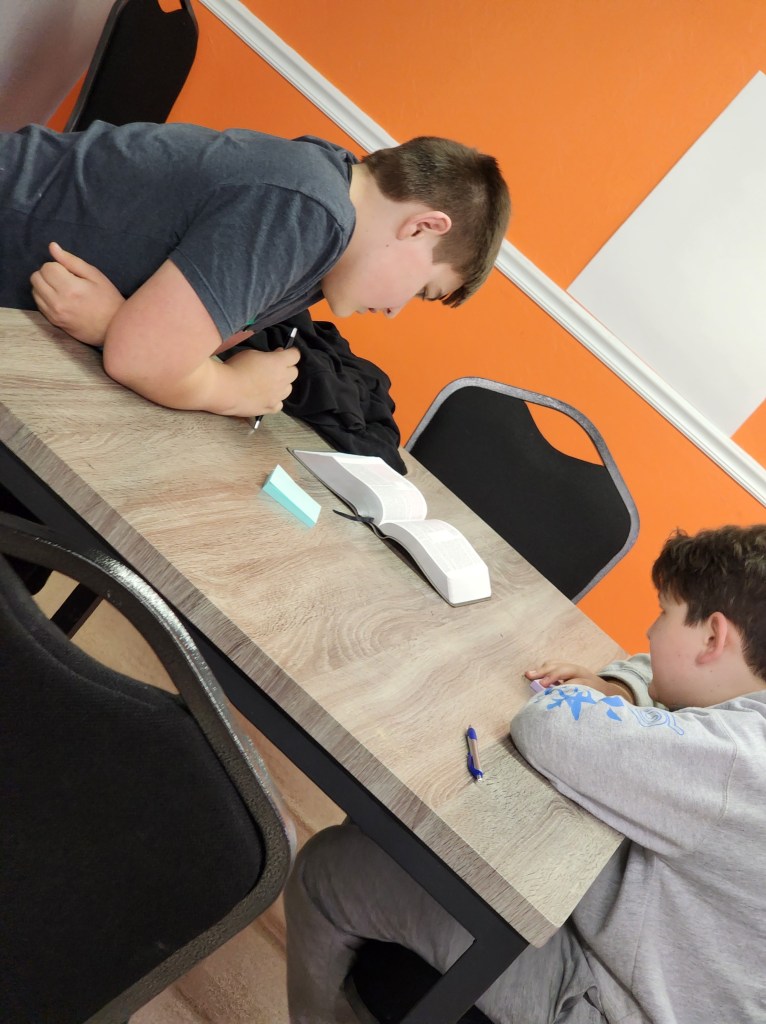
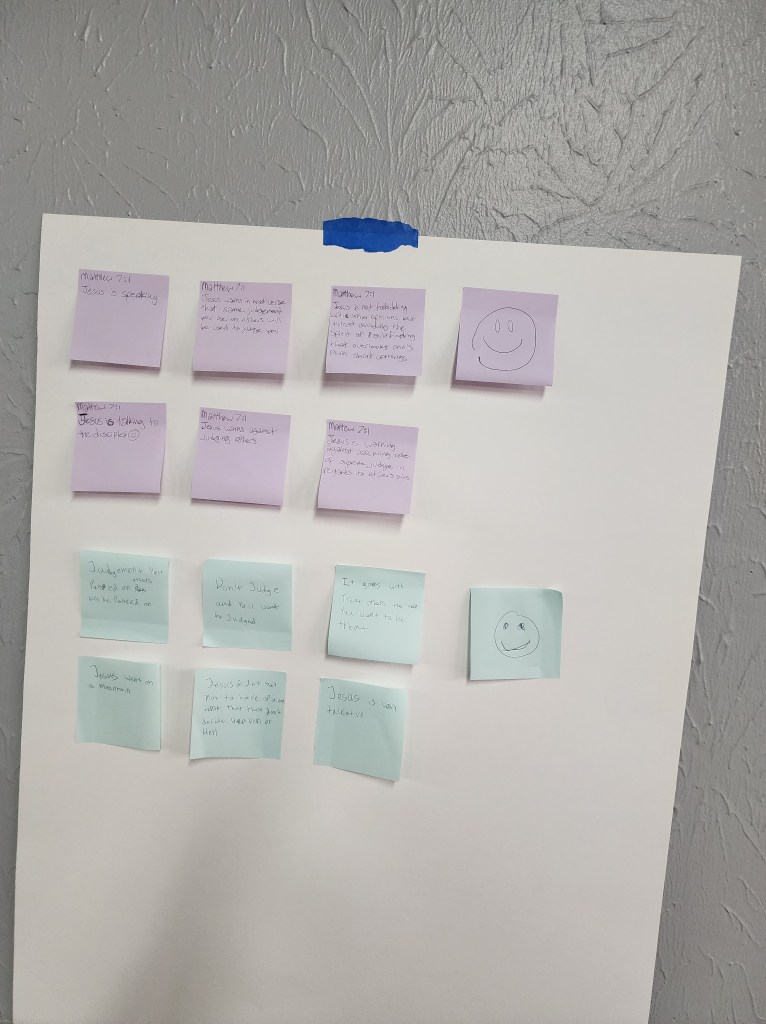
To put this into practice, we separated the students into three groups. Each group was given a verse (Philippians 4:13, Matthew 7:1, Mark 4:40). We put three large poster boards on the wall and gave each team a set of sticky notes. Students were given 15 minutes to observe the verses and passages as much as possible. There are no applications, no meanings, just observations. They were allowed to use commentary in their Bibles as they studied it together.
At the end of the 15 minutes, we challenged them to develop a Central Idea of the Text. Afterward, they had them discuss what the application of the text would be for them individually. At the end of the time together, we allowed each team to share their Central Idea and Application with everyone and then ended our evening by praying over the lessons we learned from the passages.


To top it off, each student headed out with a small gift. To help them with their own journey through the scriptures, we provided them with a notebook, pens, and highlighters for them to use!
 Adventures in Student Ministry